How AI Innovations Claude Cowork with Opus 4.6 Are Revolutionizing Small Business Marketing in 2026
AI innovations like Claude Cowork with Opus 4.6 are revolutionizing small business marketing in 2026. They enable personalized campaigns and data-driven
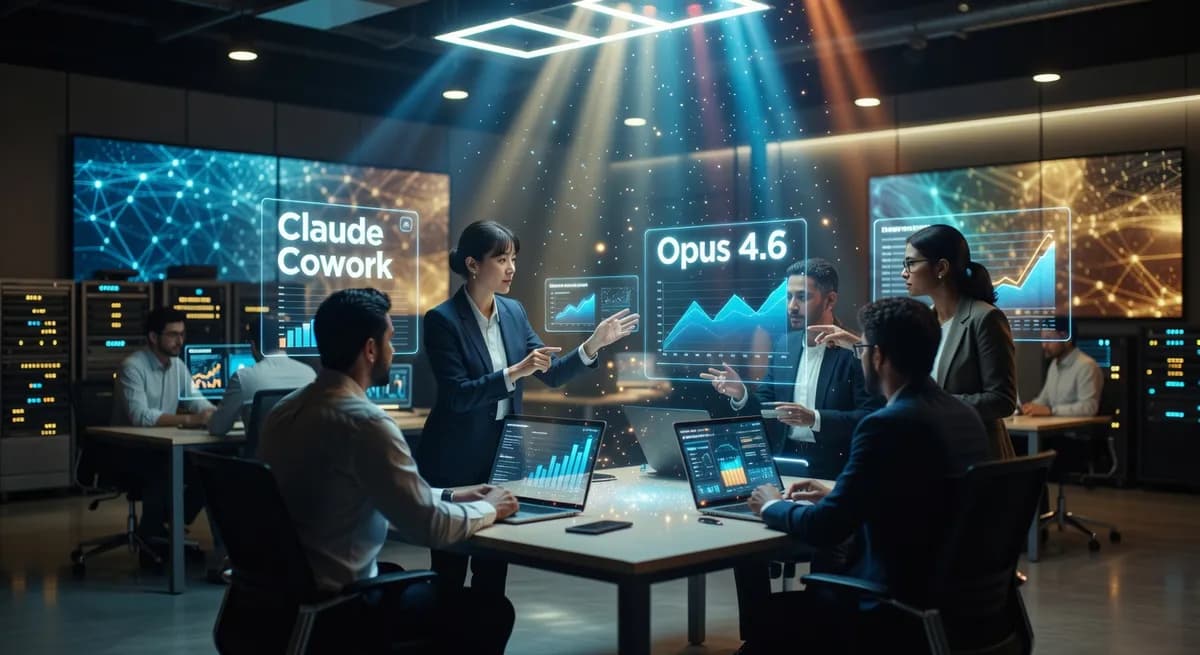
In the fast-paced world of small business, marketing has long been a battlefield where limited budgets clash with the need for big-impact strategies. Enter 2026, where AI innovations like Claude Cowork integrated with Opus 4.6 are leveling the playing field. These tools aren't just automating tasks—they're transforming how small businesses connect with customers, predict trends, and drive growth. As a tech entrepreneur who's navigated digital transformations for years, I've seen firsthand how such advancements empower CTOs and IT leaders to rethink marketing from a strategic, tech-driven lens. In this post, we'll explore how these AI powerhouses are revolutionizing small business marketing, offering actionable insights to help you integrate them into your operations.
Understanding Claude Cowork and Opus 4.6: The AI Duo Redefining Collaboration
At its core, Claude Cowork is an AI-powered collaboration platform designed for seamless team workflows, while Opus 4.6 represents the latest evolution in generative AI models, specializing in content creation and data synthesis. Developed as an integrated suite, Claude Cowork leverages Opus 4.6's advanced natural language processing to enable real-time, intelligent assistance in marketing tasks. Think of it as a virtual marketing department that combines human creativity with machine precision.
For small businesses, this duo addresses a common pain point: resource constraints. Traditional marketing requires dedicated teams for content, analytics, and campaign management—luxuries many can't afford. Claude Cowork, built on cloud-native architecture, integrates effortlessly with tools like Google Workspace or Microsoft 365, allowing teams to co-create campaigns in real-time. Opus 4.6 enhances this by generating hyper-relevant content, from email drafts to social media posts, using predictive algorithms that learn from your brand's voice and audience data.
What sets this apart in 2026? Enhanced ethical AI frameworks ensure transparency and bias mitigation, aligning with enterprise standards for data privacy under regulations like GDPR and emerging AI governance laws. As a leader in digital transformation, I recommend starting with a pilot integration: Connect your CRM system to Claude Cowork, and let Opus 4.6 analyze customer interactions to suggest personalized outreach. This isn't just tech adoption—it's a strategic shift toward AI-augmented leadership, where IT executives can focus on high-level strategy rather than micromanaging campaigns.
Personalized Marketing at Scale: From Generic Blasts to Tailored Engagements
One of the most transformative aspects of Claude Cowork with Opus 4.6 is its ability to deliver personalized marketing without the overhead of large teams or expensive agencies. In 2026, consumers expect brands to "know" them—generic ads simply don't cut it anymore. This AI integration uses machine learning to segment audiences dynamically, creating micro-campaigns that feel bespoke.
Consider a small e-commerce business selling artisanal goods. With Opus 4.6's generative capabilities, the system can analyze purchase history, browsing behavior, and even social sentiment to craft individualized product recommendations. Claude Cowork takes it further by facilitating collaborative editing: Your team inputs a rough campaign idea, and the AI refines it into polished assets, complete with A/B testing variants.
Here are some actionable ways to leverage this for your small business:
- Audience Segmentation on Autopilot: Use Opus 4.6's data synthesis to cluster customers based on real-time behaviors, such as cart abandonment patterns, reducing churn by up to 30% according to recent industry benchmarks.
- Content Generation with a Human Touch: Generate blog posts, videos, or ad copy that's optimized for SEO and engagement. Claude Cowork's collaboration features allow team members to iterate in real-time, ensuring the output aligns with your brand ethos.
- Predictive Personalization: Forecast customer needs using cloud-based analytics. For instance, if a user frequently views eco-friendly products, the AI can auto-generate targeted emails promoting sustainable options, boosting conversion rates.
From a leadership perspective, this empowers CTOs to champion data ethics. Implement governance protocols within Claude Cowork to monitor personalization algorithms, ensuring they're inclusive and compliant. The result? Small businesses can compete with giants like Amazon in delivering experiences that build loyalty, all while keeping costs low through efficient cloud scaling.
Data-Driven Decision Making: Turning Insights into Actionable Strategies
Marketing success in 2026 hinges on data, but small businesses often drown in it without the tools to extract value. Claude Cowork with Opus 4.6 changes that by embedding advanced analytics into everyday workflows. Opus 4.6's core strength lies in its ability to process vast datasets—think terabytes of customer interactions—via cloud computing, delivering insights that inform decisions in minutes, not months.
Imagine running a local service business, like a boutique fitness studio. The AI duo can ingest data from your booking system, social media, and email metrics to predict peak demand periods. Claude Cowork then collaborates with your team to brainstorm promotions, using Opus 4.6 to simulate outcomes based on historical trends.
Key frameworks for implementation include:
- Real-Time Dashboards: Integrate with enterprise software like Salesforce or HubSpot to create intuitive visualizations. Leaders can query the AI conversationally—"What's our best channel for millennial engagement?"—and receive data-backed responses.
- Scenario Planning: Use Opus 4.6's modeling to test "what-if" scenarios, such as the impact of a new ad spend on ROI. This fosters agile leadership, where IT executives can pivot strategies based on predictive forecasts.
- Ethical Data Usage: Build in audits to ensure AI decisions are transparent. For example, flag biases in audience targeting to maintain trust and compliance.
In my experience advising on digital transformations, this level of insight democratizes advanced analytics for small teams. No more relying on gut feelings—decisions become evidence-based, driving measurable growth. Businesses adopting these tools report up to 25% improvements in marketing efficiency, per 2026 Forrester reports, by minimizing wasteful spending and maximizing high-ROI tactics.
Seamless Integration and the Future of Enterprise Software
The true power of Claude Cowork with Opus 4.6 lies in its interoperability with existing enterprise ecosystems. As cloud technology evolves, these AI innovations plug into APIs for tools like AWS, Azure, or even bespoke CRM platforms, enabling a frictionless digital transformation. For small businesses, this means no rip-and-replace overhauls—just incremental enhancements that scale with growth.
Leadership in this space requires a focus on change management. Train your team on the platform's intuitive interface, emphasizing how it augments rather than replaces human roles. Opus 4.6's natural language capabilities make it accessible, allowing non-technical staff to query complex data without coding knowledge.
Looking ahead, expect deeper integrations with emerging tech like augmented reality for immersive ads or blockchain for secure data sharing. As CTOs, positioning your organization to adopt these early can create competitive moats.
Wrapping Up: Embrace the AI Marketing Revolution
Claude Cowork with Opus 4.6 isn't just another tool—it's a catalyst for small business marketing in 2026, blending AI innovation with practical, cloud-driven strategies. From personalized campaigns to data-informed decisions and seamless integrations, these advancements empower leaders to achieve more with less. As we move forward, reflect on how your business can harness this tech: Start small, measure impact, and scale boldly. The future of marketing is here, and it's intelligent, collaborative, and profoundly transformative. What's your first step toward AI-powered growth?